
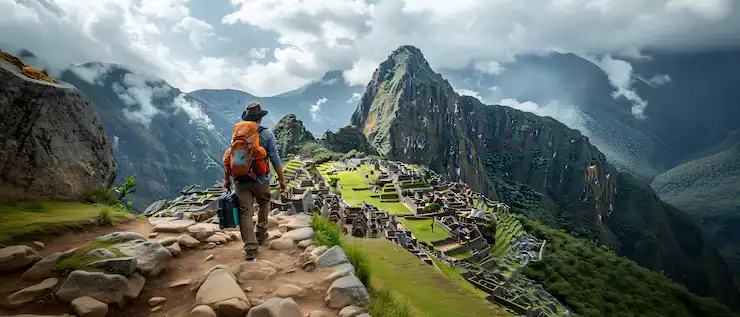
Huayna Picchu is the iconic peak that towers behind Machu Picchu in those postcard-perfect shots—but climbing it takes your adventure to another level. Steep, exhilarating, and wildly scenic, this epic hike offers the most unforgettable views in all of South America.
In this guide, we’ll show you how to reach Huayna Picchu, what the climb is really like, and why it’s a must for every traveler chasing the full Machu Picchu experience.
You may also like: How to visit Kuelap Fortress in 2025: A complete guide
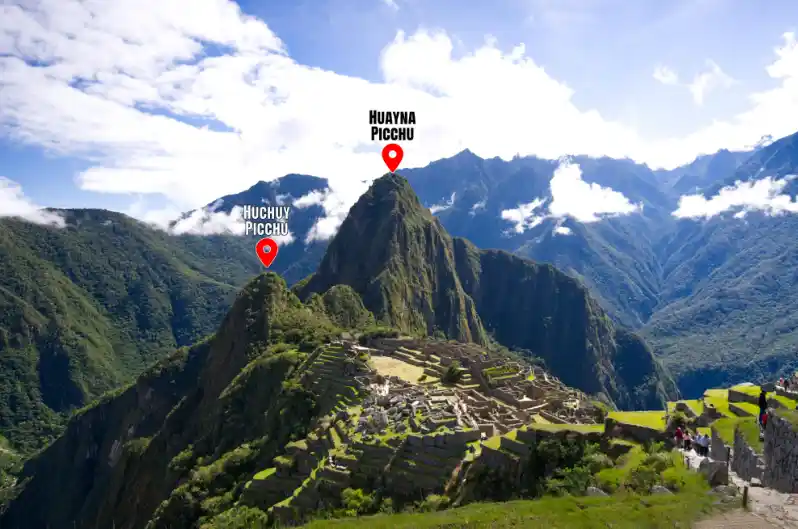
What is Huayna Picchu?
Huayna Picchu, that striking mountain rising like a guardian behind Machu Picchu in every postcard you’ve ever seen is much more than just a photogenic backdrop. Its name means “Young Peak” in Quechua, standing in poetic contrast to “Machu Picchu,” or “Old Peak.” And while it may be called “young,” this mountain holds some of the oldest and most mysterious secrets of the Inca civilization.
Climbing to about 2,720 meters (8,920 feet) above sea level, Huayna Picchu is famous for its steep, winding trails and ancient stairways that seem to float between the clouds. Along the way, you’ll pass remnants of Inca temples, terraced gardens, and panoramic views that will quite literally take your breath away.
For the Incas, Huayna Picchu wasn’t just another mountain, it was sacred. Historians believe it was used for spiritual ceremonies, astronomical studies, and even agricultural testing. Today, walking those same paths feels like stepping into another world, a rare opportunity to blend adventure with meaning.
If you’re planning to visit the citadel, adding a Huayna Picchu tour is more than worth it. It’s not just a hike, it’s a memory in the making, one that will stay with you long after you’ve left the Andes behind.
You might be interested in: Holy week in Peru 2025: 10 best destinations to visit
Climbing Huayna Picchu: What to Expect
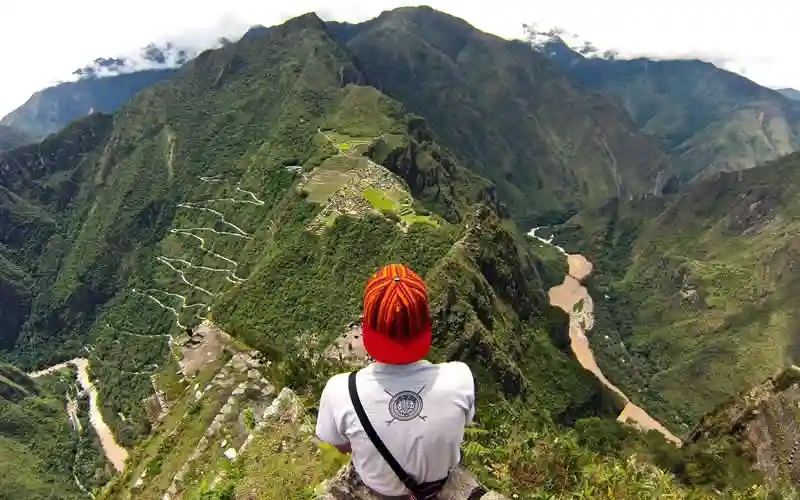
Let’s not sugarcoat it: Huayna Picchu is a challenge. The trail is often steep and can feel more like climbing stairs than hiking. There are sections where you’ll use your hands, and the famous “Stairs of Death” near the top can be intimidating for those with a fear of heights.
However, the hike is relatively short. Most people reach the top in 45 to 60 minutes. What it lacks in distance, it makes up for in verticality and intensity. The trail winds through jungle paths, stone staircases, and ancient Inca terraces. Ropes and handrails are provided in some steeper areas to aid with stability.
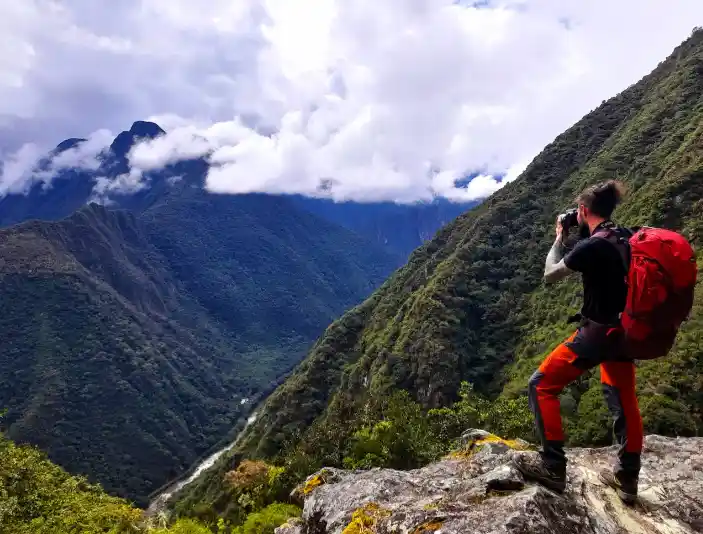
As you ascend, the views become increasingly dramatic. The Urubamba River snakes far below, and the surrounding Andean peaks stretch into the clouds. One of the highlights along the trail is the hidden Temple of the Moon, a ceremonial Inca site tucked into a cave on the far side of the mountain. Not everyone makes the detour to see it, but those who do describe it as mysterious and unforgettable.
Safety is a common concern, and while the hike is safe for most reasonably fit individuals, it requires caution. Good hiking shoes with excellent grip are essential, and it’s best to go slowly, especially if the trail is wet from rain or morning mist.
You might be interested in: Top 5 Inca trail tours to surprise your mom this Mother’s Day
The View from Huayna Picchu: The Most Epic Shot in Peru
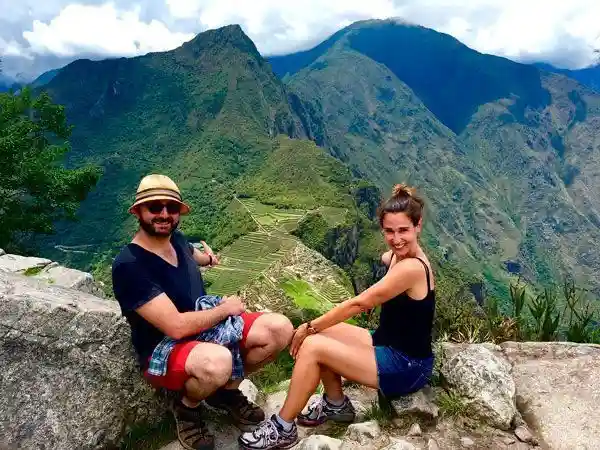
So why is Huayna Picchu known for “the most epic shot you’ll take in Peru”? Because once you reach the summit, you’re rewarded with the exact view from which the most iconic photos of Machu Picchu have been captured.
This panoramic perspective reveals the full layout of the citadel: the agricultural terraces, temples, plazas, and the main complex, all set within a lush emerald valley. The contrast between ancient stone structures and the vibrant natural landscape creates a visual masterpiece that words can barely describe.
This is the photo that will define your trip—one that evokes awe, accomplishment, and connection to something greater than yourself. It’s not just the landscape, but the journey you took to get there that makes this shot so meaningful.
If you want to secure this view, plan well in advance. Tickets to climb Huayna Picchu are limited to 200 per day and sell out fast, especially in peak season (May to September). For many travelers, booking a full Machu Picchu tours package is the easiest way to ensure they get the permits, transport, and guidance needed for the full experience.
You may also be interested in: Glamping Cusco Peru | Where luxury meets the Andes
Extending the Experience: Huayna Picchu Tours and Nearby Highlights
For travelers who want to savor every moment without rushing, the Machu Picchu Huayna Picchu Tour (2 days) is ideal. These tours typically include:
- Round-trip train and bus transfers
- Accommodation in Aguas Calientes
- Entry to both Machu Picchu and Huayna Picchu
- Guided tours of the archaeological sites
- Ample time for photography and personal exploration
With an overnight stay, you can explore the town, soak in the nearby hot springs, and enjoy Peruvian cuisine at local restaurants. In the early morning, you’ll have the chance to beat the crowds and witness Machu Picchu and Huayna Picchu at sunrise, a magical moment few ever forget.
Other nearby highlights include:
- Temple of the Moon: A spiritual site hidden within a cave, believed to have been used for rituals.
- Terraces and viewpoints: Along the trail, you’ll find several places perfect for resting and snapping panoramic photos.
- Lush flora and fauna: The biodiversity in this region is stunning, with orchids, ferns, and birds including hummingbirds and tanagers.
Climbing Huayna Picchu is more than just a physical journey. It’s a spiritual one, linking you to the ancient energy of the Andes and the mystery of the Inca civilization.
Whether you’re an avid hiker, a history buff, a photographer, or simply someone in search of something unforgettable, a Huayna Picchu tour belongs on your bucket list.
Huayna Picchu isn’t just a mountain to be climbed, it’s a journey within a journey, a rite of passage for those who want to experience Peru in all its depth. It weaves together jaw-dropping scenery, centuries-old Inca history, and just the right amount of adrenaline to leave you feeling both humbled and exhilarated.
Reaching the summit isn’t only about the views—though they are spectacular. It’s about the quiet moments along the way, the mist curling through the ruins, the stone steps carved by hands long gone, and that sense of wonder that settles in as the Sacred Valley stretches out beneath your feet.
So if you’re planning a trip to Machu Picchu, don’t let Huayna Picchu remain a distant backdrop in your photos. Book the climb. Feel the pulse of history beneath your boots. And capture the kind of moment that stays with you long after you’ve left the Andes behind. This isn’t just another hike, it’s your story to tell.
