
When you think of Peru, images of Machu Picchu, vibrant markets, and Andean landscapes may come to mind. But if you visit the country during Holy Week, believe us, you’ll witness a different and deeply spiritual side of Peruvian culture, blending Catholic devotion with centuries-old indigenous traditions.
This religious celebration isn’t just a set of religious rituals; it’s a living expression of faith, family, identity, and heritage. Whether you’re a traveler looking for a meaningful experience or simply curious about Peruvian culture, understanding this sacred week will take you on a fascinating journey through the heart of the Andes and beyond. In this article, we’ll tell you everything you have to do during Holy Week in Peru and the best destinations to visit during this religious tradition. So pack your bags and read on.
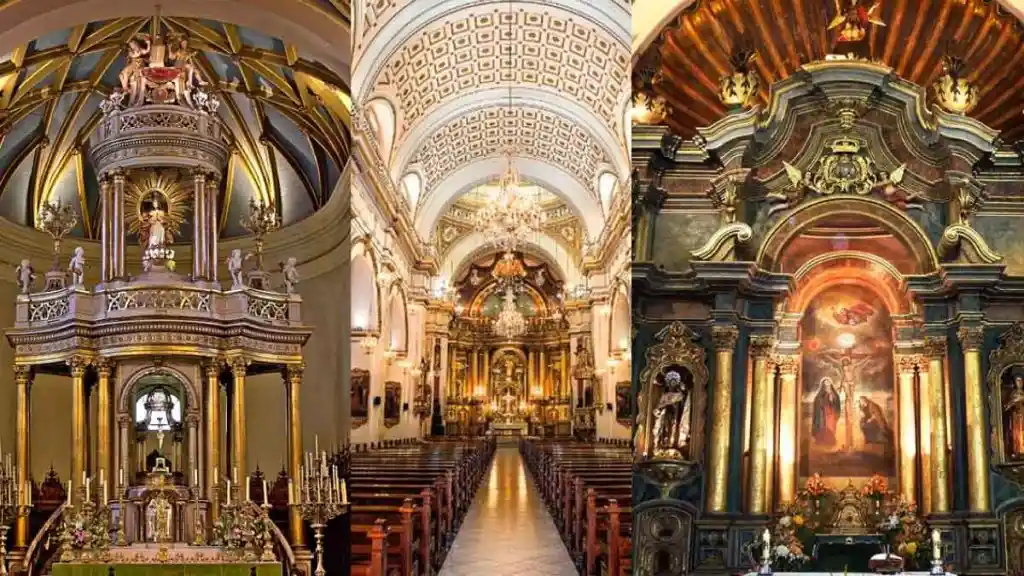
What is Holy week in Peru
In case you weren’t familiar with the tradition of Holy Week in Peru, also known as Semana Santa, it is the week before Easter Sunday. It begins with Palm Sunday and concludes with Resurrection Sunday. In Peru, this period is characterized by elaborate processions, reenactments of biblical scenes, and community gatherings that fuse religious solemnity with vibrant cultural expressions.
While it is celebrated throughout the country, each region adds its own flavor: from the mountain villages of Ayacucho to coastal cities like Lima and Trujillo, the festivities vary in color, sound, and symbolism.
When is holy week in peru 2025
The Holy Week celebration in Peru 2025 will be held from Sunday, April 13th to Sunday, April 20th. As always, it begins with Palm Sunday, which marks the beginning of the holy week, and culminates with the joyful celebration of Easter Sunday.
This period is one of the most anticipated in the religious calendar, and many Peruvians take time off to travel, gather with family, or participate in local traditions. From quiet rural towns to bustling cities, the entire country embraces this spiritual season with a sense of reverence and community. If you’re planning to visit Peru in April 2025, this week offers an incredible window into the country’s cultural soul, so we suggest taking advantage of this opportunity to see another side of Peruvian cities.
You might also want to check out: 10 fascinating facts about the Catacombs in Lima Peru, one of the oldest in South America
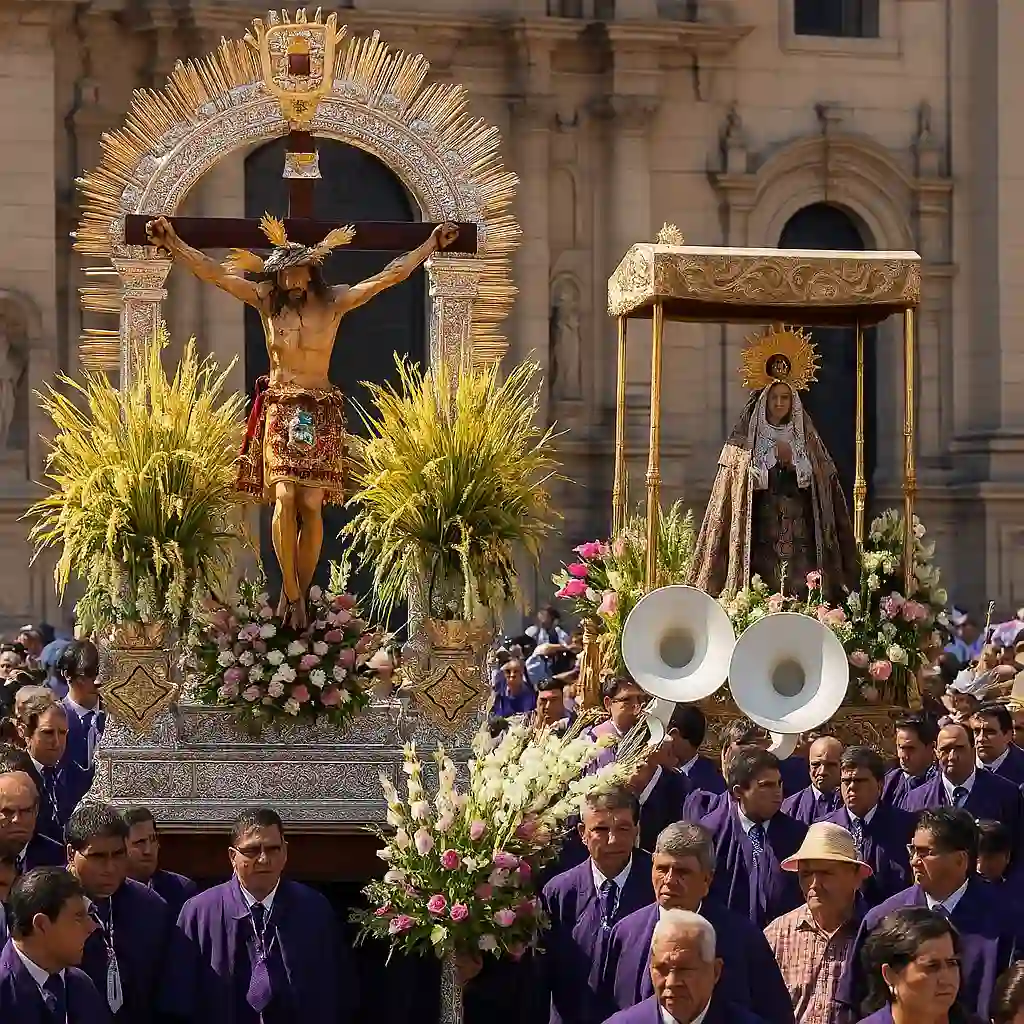
Key days of Holy week in Peru
Palm Sunday
Holy Week begins with a gesture of hope: Palm Sunday. On this day, the faithful remember Jesus’ triumphant entry into Jerusalem by carrying blessed palms to church. In every corner of Peru, from the coast to the Andes, it is common to see people carrying crosses woven from palm or rosemary leaves. These figures not only represent faith, but also protection: many families place them on the doors of their homes throughout the year, like a sacred amulet against difficulties.
Masses and processions are celebrated outdoors, and in some towns, children participate with hand-decorated branches. It is a day that smells of incense, of a people gathered together, of new beginnings.
Holy Thursday
Holy Thursday marks one of the most intimate moments of Holy Week: the Last Supper. In Peru, this day has a deep-rooted tradition that goes beyond the religious: the visit to the seven churches. Entire families tour the temples in their city or neighborhood as a sign of respect and faith, recalling the steps Jesus took before being captured.
But in addition, a very special dinner is prepared in homes. In many homes, especially in the interior of the country, twelve different dishes are served, each representing the apostles. There is usually no meat, but rather traditional dishes made with fish, native potatoes, Andean grains like quinoa, and homemade sweets. It is a night of recollection, but also of family unity.
Good Friday
The silence of Good Friday is distinct. You can feel it in the air, in the streets, in the eyes of the people. This is the day that commemorates the crucifixion of Jesus, and in many Peruvian cities, everything stops. The bells don’t ring, the radios lower their volume, and religious images are covered with black cloth as a symbol of mourning.
In places like Ayacucho, the solemnity transforms into an impressive spectacle of faith. As night falls, thousands of people participate in a procession lit only by candles and torches. The sacred images parade through the cobblestone colonial streets while the faithful sing hymns in Quechua or Spanish. It’s impossible not to be moved. For many, it is the heart of Holy Week.
Holy Saturday
After mourning, comes the time of waiting. Holy Saturday is a day of pause and transition, between sorrow and joy. In some communities, cultural activities are organized, with evenings of music or shared reflections. People begin to leave behind the sadness of Good Friday and prepare to receive the good news of the resurrection.
In many churches, the Easter Vigil is celebrated, a ceremony that begins at night and marks the passage to a new light, with lit candles, songs, and blessings.
Easter Sunday
And then, joy arrives. Easter Sunday is a burst of life: bells ringing, festive masses, flower-filled processions, music in the plazas, and families gathering to celebrate.
In several towns, such as Cajamarca or Huancavelica, it is customary to burn an effigy of Judas, a symbolic figure representing betrayal, as a way to renew faith and begin anew. It is also customary to share a special lunch, full of local flavors, laughter, and gratitude. It is the perfect closing to a week where the spiritual and the human meet in every gesture, every step, every prayer.
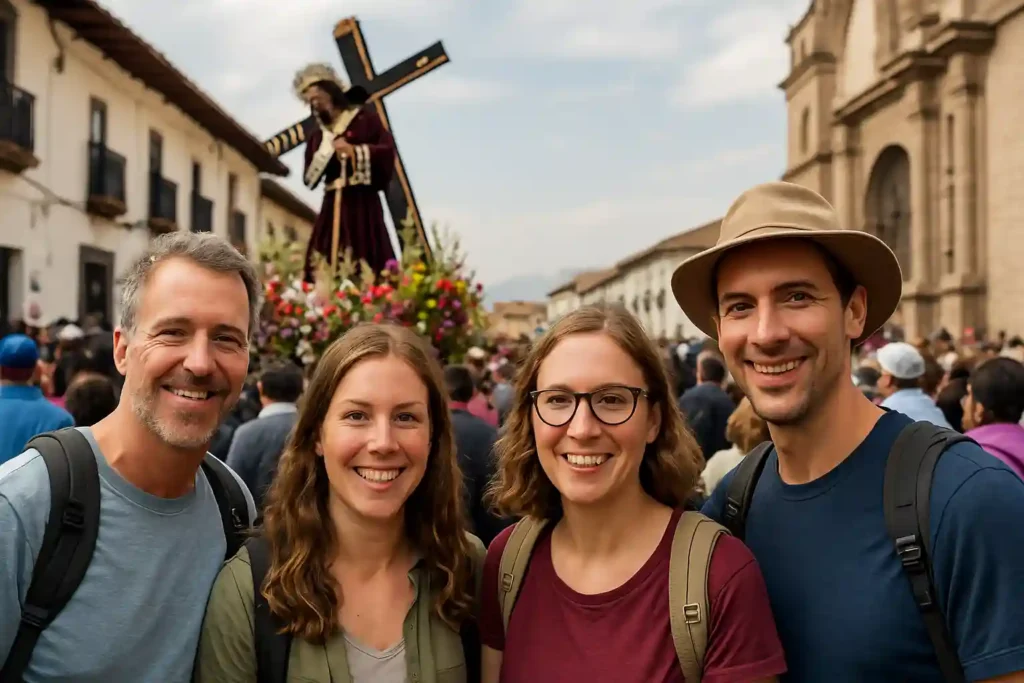
Tips for enjoying Holy Week in Peru
Holy Week is one of the most important and heartfelt holidays in Peru. It is celebrated throughout the country with a deep spiritual meaning, but also as an opportunity for family reunion, cultural expression, and religious tourism. To enjoy it authentically and respectfully, here are some key recommendations:
Plan Ahead
During Holy Week, thousands of people travel to provinces to participate in processions or visit relatives. It’s one of the busiest times of the year, so flights, buses, and hotels often fill up quickly.
If you plan to travel during Holy Week, we recommend planning your flight with the best Peru Tour Packages Operator. Especially with popular destinations like Ayacucho, Cusco, or Tarma, book your accommodations and transportation at least three to four weeks in advance.
- Keep in mind that prices can double during this season. For example, a Lima-Ayacucho flight that usually costs $30 can rise to $60 or more during Holy Week.
- For buses, companies like Cruz del Sur, Oltursa, or Movil Bus offer fares from $15 to $50, depending on the destination and type of service (economy or sleeper).
- Respect the religious nature of the celebrations
Even if you are a tourist, remember that for most Peruvians, Holy Week is a sacred occasion. In many regions, especially in the Andes, it is observed with deep reverence. - During processions, remain silent or speak quietly.
- Avoid taking flash photos, using drones, or crossing in front of religious images.
Dress modestly and appropriately
There is no mandatory dress code, but common sense and cultural respect are key.
- The color purple is traditional for Holy Week, associated with mourning and penitence.
- Modest clothing is recommended: avoid flashy clothing, low-cut tops, or shorts, especially if you attend processions or enter temples.
- In regions like Cusco or Huaraz, the weather can vary significantly throughout the day. Bring a light jacket, sunscreen, comfortable shoes, and a hat.
Participate in local traditions
Each city or town has its own customs. It’s not enough to observe; you can also participate, with respect.
- In Ayacucho, join a nighttime procession and visit churches during Holy Thursday.
- In Tarma, help the community make floral carpets.
- In Lima, take a tour of the seven churches in the historic center, a Holy Thursday tradition.
Try typical Holy Week cuisine
During this week, red meat is avoided, and instead dishes based on fish, Andean grains, potatoes, and traditional desserts are prepared.
- On the coast, Friday chupe (friday stew), fish escabeche (fish stew), ceviche (ceviche), and torrejas (fried toast) are common.
- In the Andes, humitas (fried potatoes), olluco soup (soup of olluco), huancaína potatoes (potatoes with Huancaína sauce), and quinoa torrejas (fried toast) are popular.
- In many regions, a twelve-course dinner is served on Holy Thursday, representing the twelve apostles.
- Among the most popular desserts are mazamorra morada (purple corn porridge), rice pudding, buñuelos (fritters), and traditional artisan breads.
Consider schedules and logistics
Some streets are closed to vehicular traffic for the processions. If you use a taxi or private transportation, check the routes in advance.
How to celebrate holy week in Peru?
Holy Week in Peru is not just a religious commemoration. It is a living manifestation of the culture, identity, and history of an entire country. Although it has Catholic roots brought by the Spanish, over time it has adopted elements of Andean, Amazonian, and coastal traditions, giving rise to unique celebrations in each region.
During this week, cities are transformed: there are solemn processions, theatrical performances, traditional foods, and a deep sense of community. For Peruvians, it is a time of faith, but also of family gatherings, reflection, and respect for ancestral customs.
Faith, devotion, and tradition: a very Peruvian blend
What makes Holy Week so special in Peru is the way religious practices are intertwined with cultural values. In some towns, religious images are dressed in traditional hand-embroidered mantles. In others, processions advance on carpets of flowers or dyed sawdust that residents prepare days in advance.
In every corner of the country, this week is experienced with varying intensity, but always with profound respect. From large cities like Lima or Arequipa to small Andean towns like Ayacucho or Tarma, each place has its own rites, flavors, and ways of paying homage to the faith.
How is it celebrated day by day?
Day 1: Palm Sunday
Holy Week begins with the blessing of the palms, which symbolize Jesus’ triumphant entry into Jerusalem. In Peru, people carry hand-woven palm leaves, many shaped like crosses or flowers, for the priest to bless. These are then placed on doorsteps or altars in their homes as a symbol of protection.
Day 2: Holy Thursday
This day commemorates the Last Supper. In many cities, it is traditional to visit seven churches, in what is known as the “visit to the seven churches” it is an act of faith that symbolizes the journey Jesus traveled before being captured.
It is also common for families to prepare a special dinner, serving up to twelve different dishes, representing the twelve apostles. These dishes do not usually include meat, but rather fish, lentils, potatoes, humitas, and traditional desserts.
Day 3: Good Friday
This is the most solemn day. It commemorates the crucifixion and death of Jesus. In many places, the streets fall silent, and processions advance slowly with images covered in black. In Ayacucho, for example, all the lights are turned off and torches are lit to accompany the procession of the Holy Sepulchre, creating a mystical and unforgettable atmosphere.
On the coast, however, some communities hold live reenactments of the Stations of the Cross, going through the stations with actors who dramatize each moment of the Passion.
Day 4: Holy Saturday
It is a day of recollection, but also of hope. In some cities, fireworks are lit at night to announce the resurrection of Christ. It is considered a time of transition: mourning is left behind and the spirit is prepared for the joy of the following day.
Day 5: Easter Sunday
The most joyful celebration arrives: Jesus has risen. Festive masses are held, bells are rung, there are more colorful processions, and many families take the opportunity to share a special meal. In some places, an effigy of Judas is burned, as a symbol of the triumph of good over evil.
10 best destinations to visit in Holy week in Peru 2025
1. Holy week in Ayacucho 2025
If there’s one place in Peru where Holy Week is lived with the soul, it’s Ayacucho. This Andean city, known for its 33 colonial churches, becomes the epicenter of faith, culture, and popular religious art in April. Experiencing Holy Week here isn’t just about attending events: it’s about feeling every step, every song, every flower placed on the ground with devotion.
Why is Ayacucho the #1 destination for Holy Week?
Moving nighttime processions: Every night, the streets are lit with candles, torches, and lanterns. Religious images advance in silence, surrounded by faithful who sing sacred hymns with a devotion that makes your skin crawl.
- Temporary floral carpets: Neighbors and artisans come together to create true works of art on the ground, made with petals, dyed sawdust, and leaves. Walking them is walking through history and faith.
- Sacred Flavors: Try typical sweets like mazamorra morada (purple porridge), rice pudding, or quinoa fritters. On Holy Thursday, many families prepare up to 12 different dishes in homage to the apostles.
- Unique Cultural Fusion: Catholic rituals blend with living Andean traditions. Some religious images wear Ayacucho textiles, and there are also songs in Quechua.
- Pascha Bull: On Holy Saturday, the festival takes over Acuchimay Hill with decorated bulls, music, color, and popular celebration.
This is how Holy Week is experienced in Ayacucho, day by day
- Friday of Sorrows
The celebrations begin with the first procession from La Magdalena Church. From this day on, the rhythm of the city changes completely: devotion is in the air. - Palm Sunday
Crowds gather in front of the Cathedral to bless their palms. There are live reenactments of Jesus’ entry into Jerusalem and traditional Andean music. - Holy Thursday
The Chrism Mass is celebrated in the Cathedral, where the holy oils are blessed. The Washing of the Feet, a deeply symbolic ceremony, also takes place.
Good Friday
This is the most solemn moment. The procession of the Recumbent Christ, accompanied by the Virgin of Sorrows, departs from Santo Domingo. The streets darken, the silence overwhelms, and the contemplation is complete. - Holy Saturday
In Acuchimay, the Easter Bull is celebrated, a tradition rooted in the rural community, where faith blends with joy and dance. - Easter Sunday
From very early in the morning, the bells ring out the resurrection of Christ. There are festive masses, flower-filled processions, and fireworks at nightfall. The perfect ending to an unforgettable week.
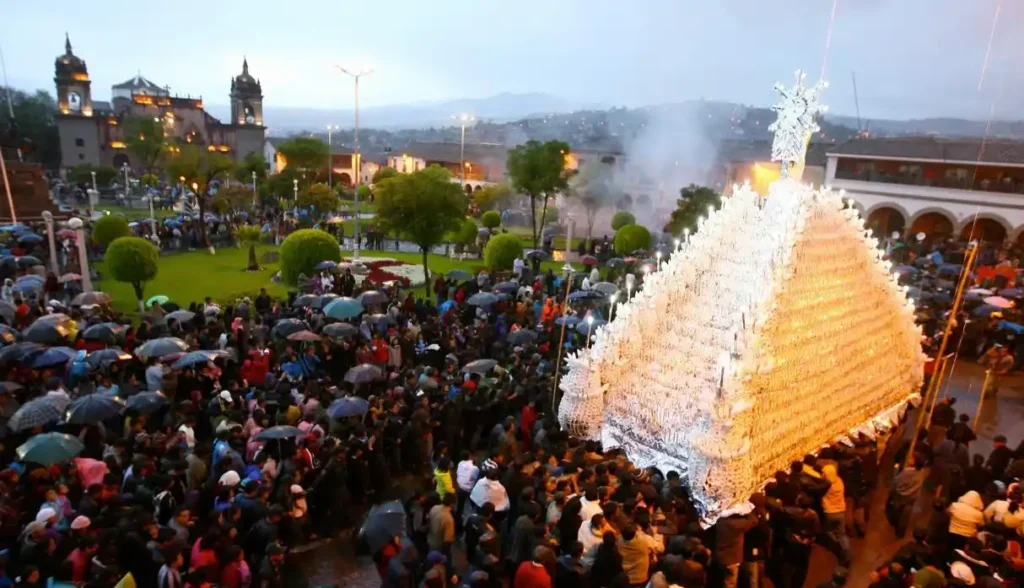
What to see and do in Ayacucho besides the processions?
- Acuchimay Lookout
A must-see spot to admire the entire city from above, especially at dawn or on procession nights. - Ayacucho Pampa Historic Sanctuary
Where Peru’s independence was sealed. Ideal for lovers of history and freedom. - Wari Archaeological Complex
Explore the ruins of the capital of the first pre-Incan Andean empire. A little-known archaeological gem. - Vilcashuamán
Here you’ll see an impressive Inca ushnu and a colonial church built on an Inca foundation. The most literal cultural fusion. - Qorihuillca Canyons
A little-explored natural spectacle: towering stone walls, mysterious formations, and a picture-perfect landscape. - Ayacucho Central Market
Feel the true pulse of the city. Here you’ll find unique handicrafts, Andean cheeses, traditional breads, and more. - Jirón 28 de Julio
The commercial and historic heart of Ayacucho. Shops, cafes, art, everyday life, and colonial architecture.
How to get to Ayacucho from Lima?
Option 1: Direct Flight
Duration: 1 hour
Approximate cost: from $30 USD each way
Airlines: LATAM, Sky Airline
Ideal if you want to save time and avoid a long road trip.
Option 2: Tourist or Economy Bus
Duration: between 8 and 10 hours
Price: between $15 and $30 USD depending on the service (economy, semi-sleeper, or sleeper)
Recommended if you want to enjoy the Andean scenery and travel at night.
Option 3: Travel by Car
Estimated time: 7 to 8 hours
Route: Central Highway or Panamericana Sur + Los Libertadores Highway
Perfect if you want to stop along the way and explore other towns.
Ready to experience something beyond tourism?
In Ayacucho, Holy Week isn’t observed, it’s felt. Every procession, every floral carpet
2. Holy Week in Cusco 2025
If Ayacucho is devotion, Cusco is mysticism and a living legacy. In this city, once the heart of the Inca Empire, Holy Week is not limited solely to Catholic traditions; it is also present in the stone walls of ancient temples and in the vibrant fusion of Andean and Christian rituals that continue to shape local identity. For those wishing to delve deeper into this cultural and spiritual richness, exploring the region through Salkantay treks offers a unique perspective. These multi-day tours not only reveal stunning landscapes but also connect travelers with the spiritual pulse that still resonates in the Andes.
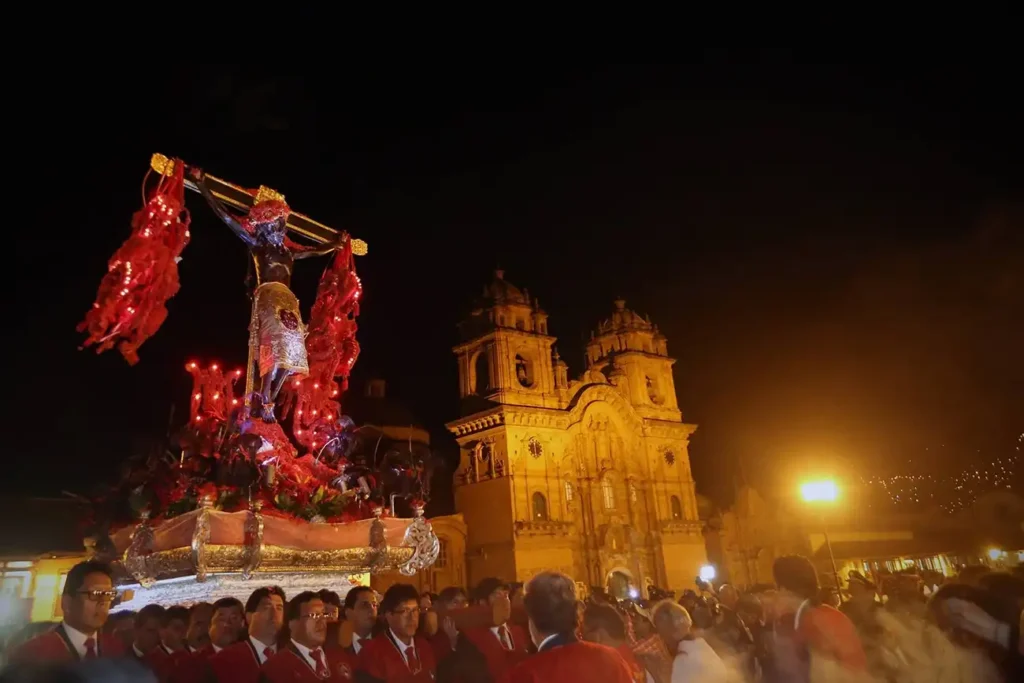
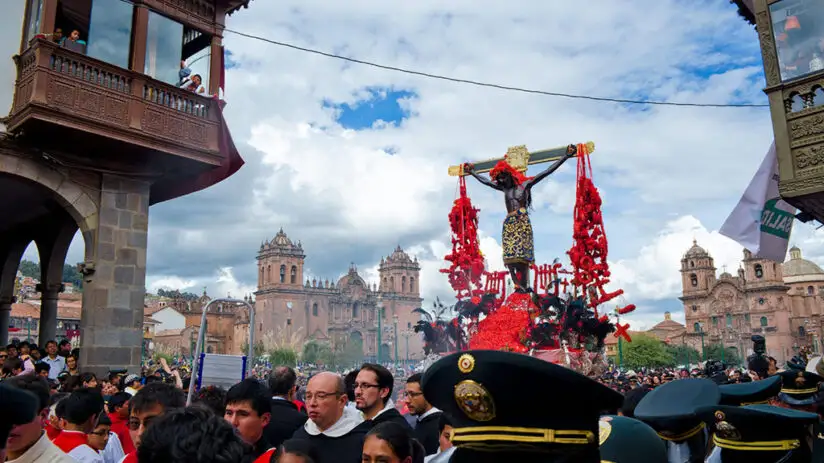
Most Sacred: The Lord of the Earthquakes
Every Holy Monday, thousands of people gather in the Plaza de Armas to welcome the Lord of the Earthquakes, an image of a mestizo Christ considered the protector of the city since, according to history, he stopped an earthquake in 1650.
- Don’t Miss:
Mass and procession of the Lord of the Earthquakes with petals of the ñucchu, an Andean flower. - Visit to the seven churches on Holy Thursday.
- Twelve-course tasting in traditional restaurants.
Extra for travelers:
Qoricancha Temple, an example of syncretism between the Inca religion and Catholicism.
Nearby ruins: Sacsayhuamán, Qenqo, and Tambomachay.
How to get there?
Flight from Lima: 1 hour / from $50 USD
Bus: approximately 21 hours / from $35 USD
3. Holy Week in Tarma 2025
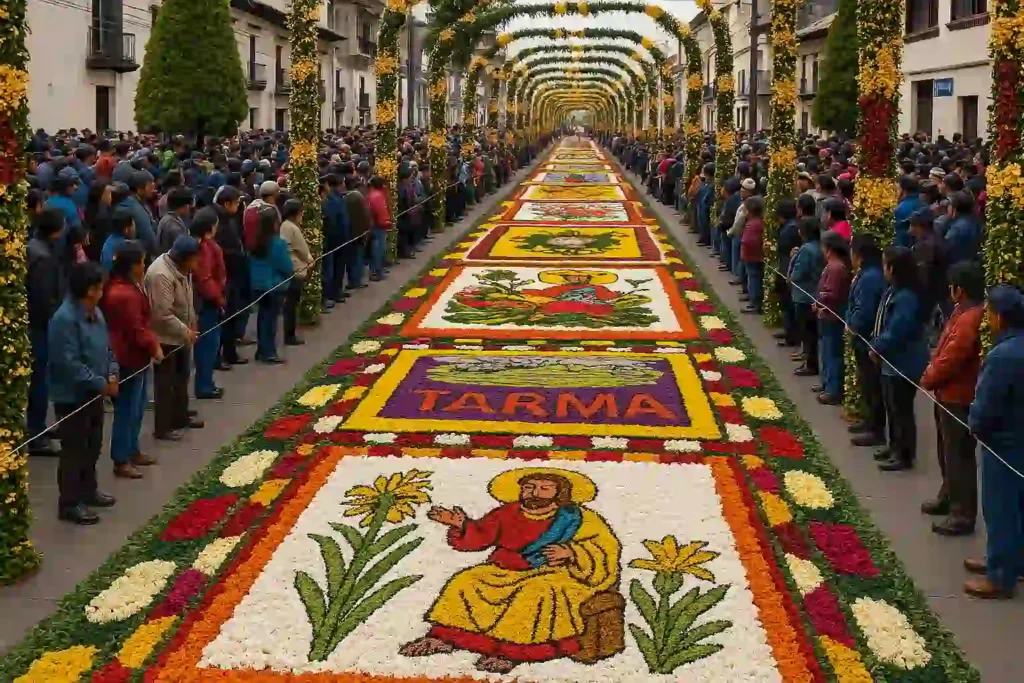
Tarma experiences Holy Week as a great act of collective love. Here, faith can be smelled, touched, and seen in every petal. It is famous for its carpets of natural flowers, which cover entire streets and are an explosion of color, art, and devotion.
Most special:
Neighbors work all night on Holy Thursday to create true works of art with flowers, sawdust, and leaves.
Processions walk over these ephemeral tapestries at dawn on Good Friday.
What else to see?
- Gardens and flower nurseries.
- Mirador de la Virgen del Carmen.
- Tarma Cathedral and its neoclassical architecture.
How to get there?
From Lima: 5–6 hours by central highway.
Bus: from $10 USD
Ideal for a short getaway, close to the capital.
4. Holy week in Arequipa 2025
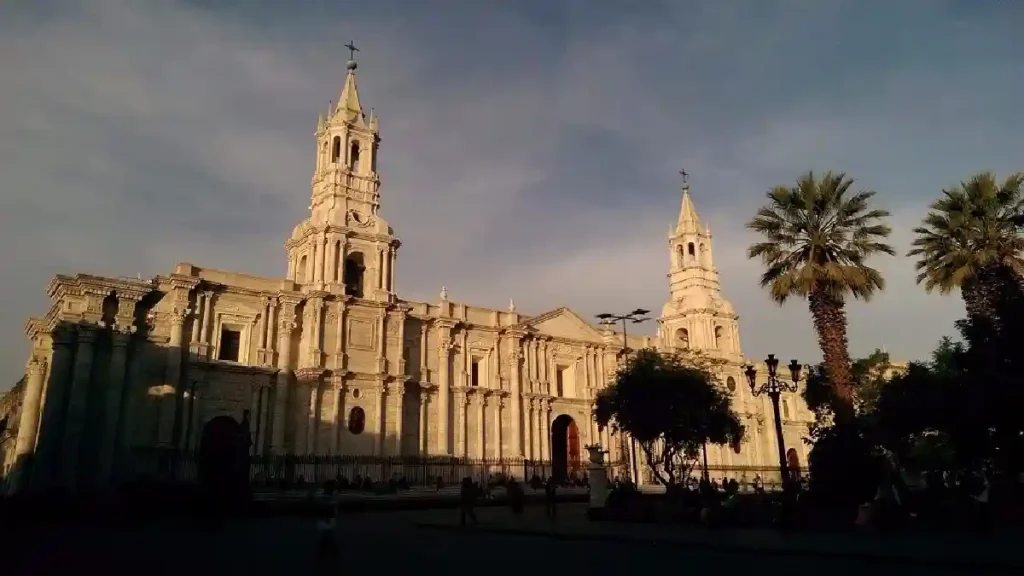
The White City is dressed in sobriety and reflection during Holy Week. The beauty of its white ashlar architecture contrasts with the austerity of its processions, especially the striking Stations of the Cross on the Misti volcano.
Not to be missed:
On Good Friday, hundreds of faithful climb the Misti volcano to reenact the Stations of the Cross.
Processions from Arequipa Cathedral and the Church of San Francisco.
Traveler’s bonus:
Santa Catalina Monastery: beauty and peace in the heart of the historic center.
Savor the traditional “cauche de queso” and other meatless dishes from Arequipa’s cuisine.
How to get there?
Flight from Lima: 1.5 hours / from $50 USD
Bus: 16 hours / from $25 USD
5. Holy week un Lima: Tradition in the big city
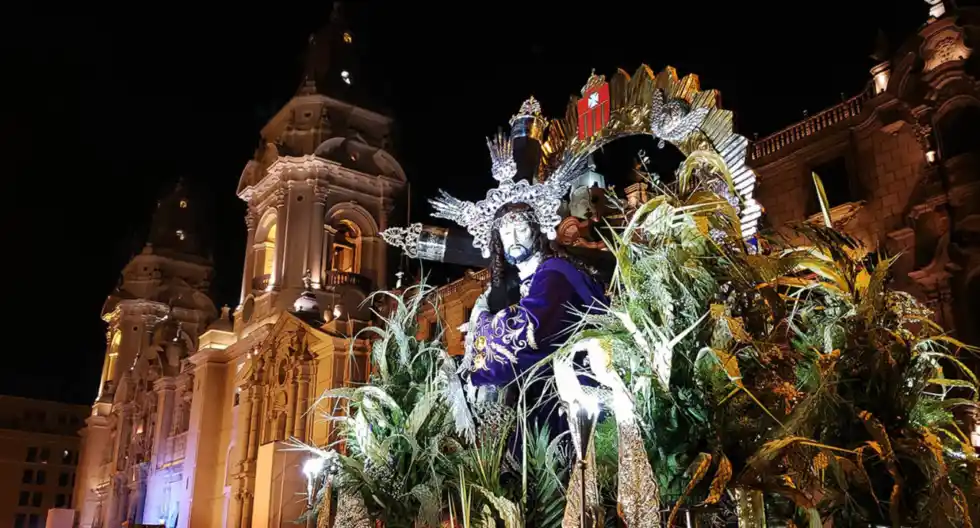
Although many Limeños travel to the interior during Holy Week, those who stay can experience profound celebrations in the historic heart of the city.
Worth seeing:
Procession of the Christ of the Agony from the Church of San Pedro.
Solemn Masses at the Cathedral Basilica and sacred music concerts.
Church tour in the historic center as part of the Holy Thursday tradition.
Culture and faith in balance:
Visit the Museum of Religious Art.
Tour of the catacombs of the Convent of San Francisco.
How to get around?
Public transportation, taxis, or walking if you stay in downtown Lima.
6. Holy week in Trujillo 2025
Trujillo combines colonial elegance with devotion. Its Holy Week is less massive than Ayacucho’s, but just as heartfelt. The city decorates its streets and squares with flowers and organizes processions with 17th-century images.
Highlights:
Procession of the Virgin of Sorrows through the historic center.
Floral carpets and sacred music in the Plaza de Armas.
Easter Mass at the Cathedral Basilica.
Extras not to be missed:
Visit to Chan Chan and Huaca del Sol y la Luna.
Walk through Huanchaco and taste fresh fish.
How to get there?
Flight from Lima: 1.5 hours / from $40 USD
Bus: 9–10 hours / from $20 USD
7. Holy week in Puno 2025
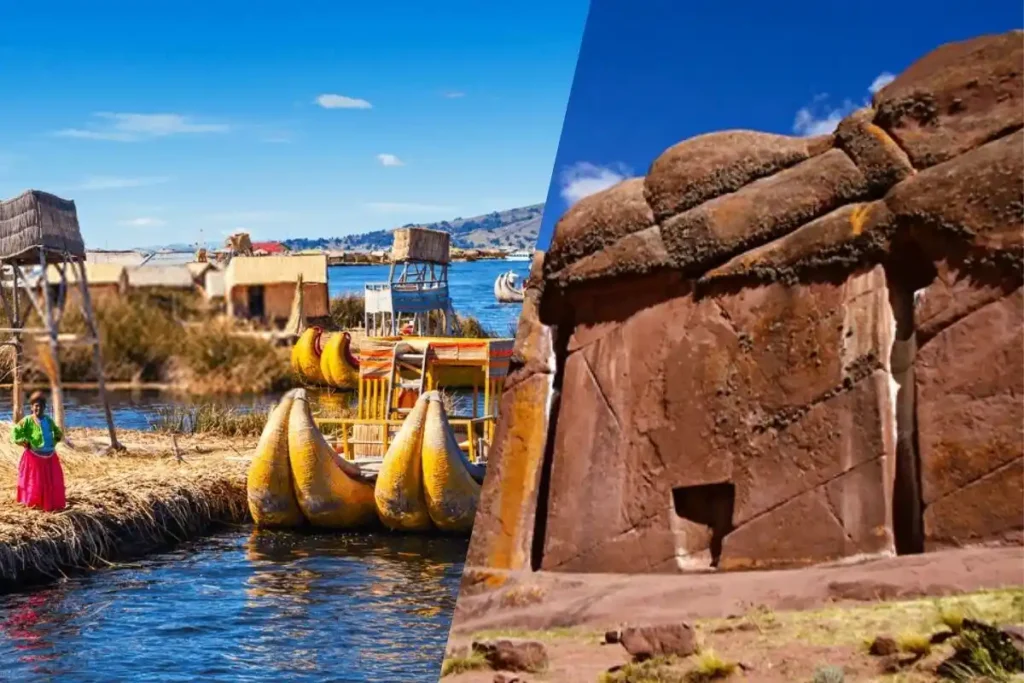
On the shores of Lake Titicaca, Puno celebrates Holy Week with silent respect. The “Blessing of the Waters” is an Andean ritual that asks for protection for the lakeside communities.
Unique ritual:
On Good Friday, an image of Christ is carried to the lake and the waters are blessed.
Island communities, such as the Uros and Taquile, participate with songs and offerings.
What else to do:
Sail Lake Titicaca on a totora reed raft.
Visit Sillustani, a pre-Incan cemetery with stunning views.
How to get there?
Flight to Juliaca + taxi to Puno: from $60 USD
Bus from Lima: 20–22 hours / from $30 USD
8. Holy week in Huancayo 2025
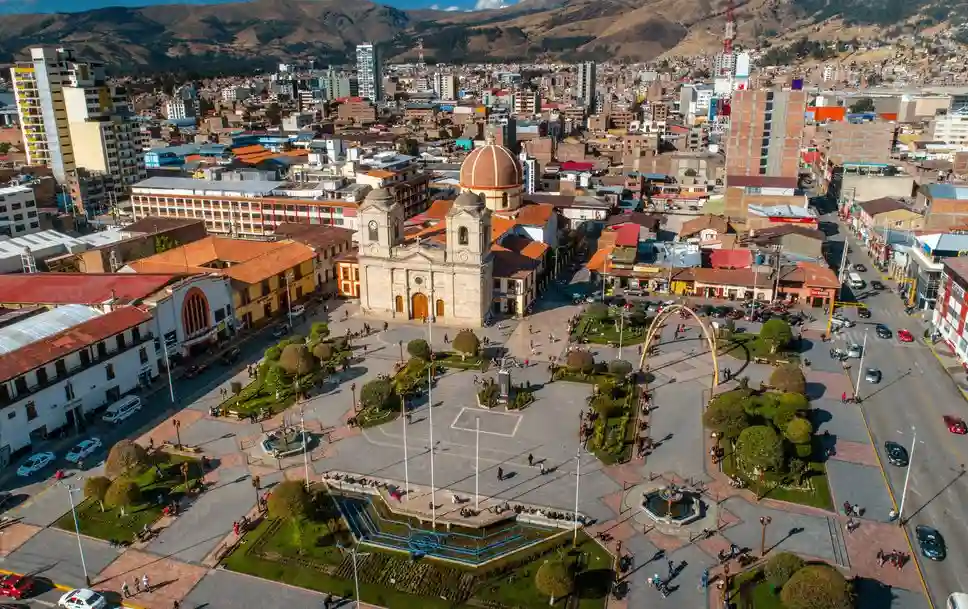
In the Mantaro Valley, Huancayo blends religious traditions with the festive Andean spirit. The traditional Pascua Toro (Toro Easter) event is a highlight, combining a procession, music, and flower-decorated bulls.
Unique traditions:
Pascua Toro (Toro Easter): bull parades, bands, and folk dances on Holy Saturday.
Masses at the Cathedral and processions in Plaza Constitución.
9. Holy week in Cajamarca 2025
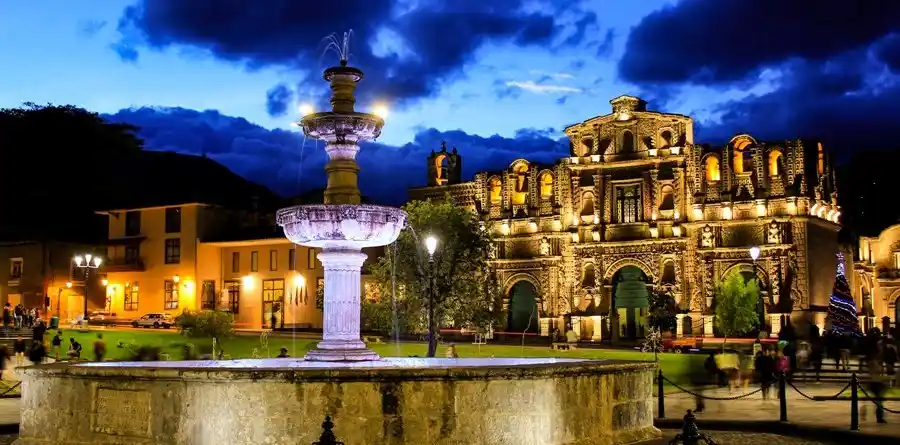
Cajamarca has one of the most artistic Holy Weeks in northern Peru. Its processions are serene, but accompanied by choirs and sacred art.
Special Moments:
Procession of the Holy Sepulcher through the Plaza de Armas.
Baroque music concerts in colonial churches.
Gastronomic fair with traditional meatless dishes.
Take the opportunity to visit:
The Inca Baths.
Cumbemayo and the Canal de los Incas.
How to get there?
Flight from Lima: 1 hour / from $60 USD
Bus: 14 hours / from $25 USD
10. Holy week in Huaraz 2025
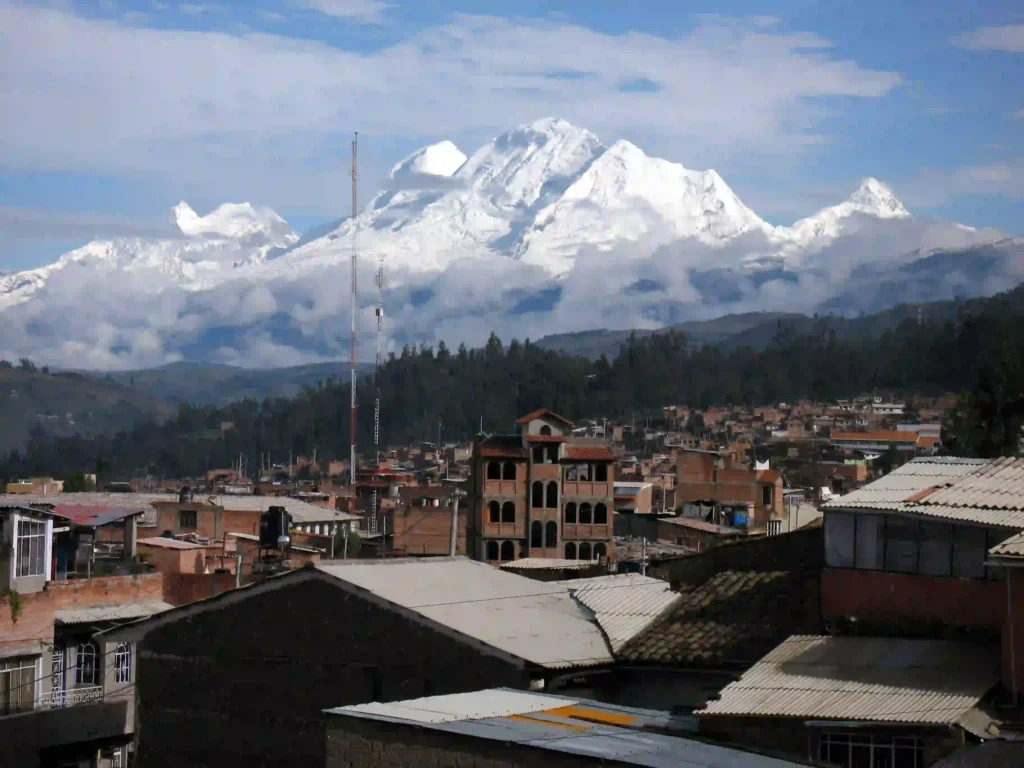
In Huaraz, Holy Week is experienced among the mountains. The processions run through the city center against a backdrop of snowy mountains, and the Stations of the Cross climb the slopes of Rataquenua or even Pastoruri.
Not to be missed:
The Stations of the Cross in the mountains: devotion and scenery like you’ve never seen before.
Fair of traditional sweets and breads in the Plaza de Armas.
Easter Sunday procession with traditional costumes.
Additional plan:
Hiking in Laguna 69 or Llanganuco.
The Monterrey Hot Springs to relax after the processions.
How to get there?
Bus from Lima: 8–9 hours / from $20 USD
Access by land only, but with picture-postcard landscapes.
Food during Holy Week in Peru 2025
When we talk about Holy Week in Peru, the first thing that comes to mind is the processions, religious images, spiritual contemplation… but there’s something else, something equally profound: the food. Because during these holy days, flavors also play an important role. They are a way of living our faith, of remembering those who are no longer with us, of gathering with family, and of honoring traditions passed down from generation to generation.
And since Peru is a country of many geographies and cultures, each region experiences this week in its own way. The food varies depending on whether you’re on the coast, high in the Andes, or in the middle of the jungle. What doesn’t change is the essence: preparing dishes that don’t include red meat, showing respect through food, and sharing it with your loved ones.
The Coast: Freshness, Sea, and Creole Seasoning
In the cities and towns of the Peruvian coast, Holy Week tastes like the sea. Being located next to the Pacific Ocean, fish and seafood take center stage at the table. People tend to avoid red meat out of respect for Catholic tradition, so the menu is creatively adapted and full of flavor.
- Fresh fish ceviche: Although not necessarily eaten on Good Friday due to its acidity, it is often served on other days of the week.
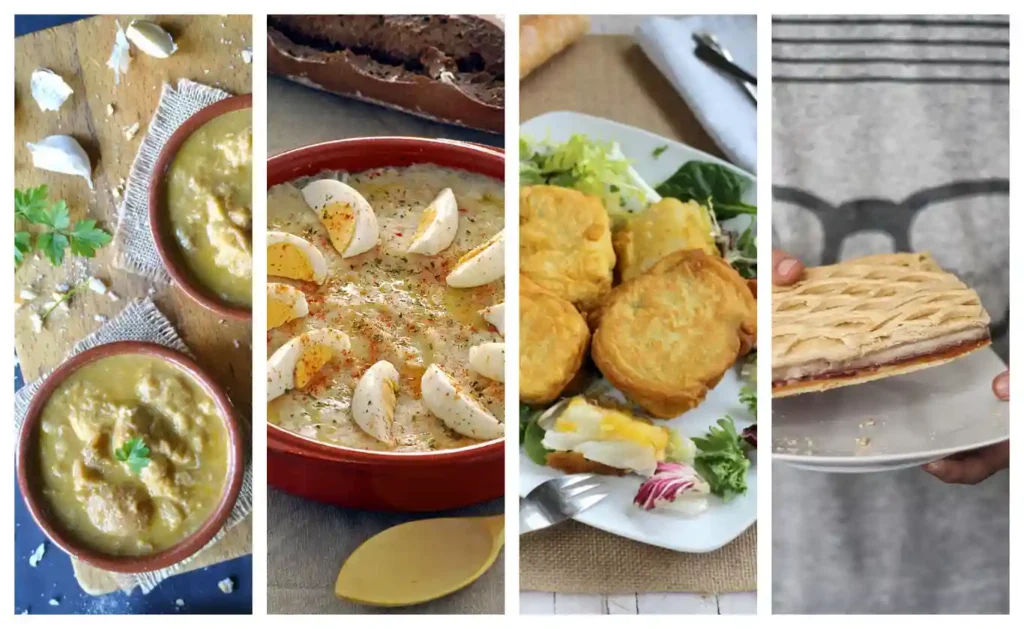
- Friday chupe: A thick and flavorful soup made with fish, milk, potatoes, beans, egg, and cheese. In some places, rice or yuca is added.
- Fish escabeche: Fried fillets bathed in a sauce of onion, vinegar, and chili peppers. Served cold, it is ideal for hot days.
- Fish or vegetable torrejas: Fried and crispy, accompanied by rice and salads.
- Traditional desserts such as picarones, rice pudding, and mazamorra morada are served after the family lunch.
In many homes, especially in cities like Lima, Trujillo, or Piura, it’s common to prepare 12 small dishes on Holy Thursday, in honor of the 12 apostles. It’s not about overeating, but rather remembering the symbolic value of the Last Supper with every bite.
In the Andes: cuisine with roots and Andean soul
In the Andes, Holy Week has a more intimate, more communal feel. Here, dishes don’t feature fish (for obvious geographical reasons), but are instead made with what the land provides: potatoes, grains, cereals, and cheeses. It’s a humble cuisine, but deeply meaningful.
- Olluco soup with cheese or milk, a simple and comforting preparation.
- Papas a la Huancaína, although known as a coastal dish, is beloved in the Andes.
- Quinoa fritters, a plant-based, tasty, and very nutritious alternative.
- Purple corn porridge, served hot or cold, ideal for warm days.
- Sweet or savory humitas (small sweet corn tortillas) are wrapped in corn husks and steamed.
Something very common in the mountains during Holy Week is for women to gather as a community to cook together. It’s not uncommon to see huge pots on the fire in patios or communal kitchens, and long tables where what’s prepared is shared among neighbors and family.
In the Amazon: exotic and seasonal flavors
In the Peruvian Amazon, Holy Week is also celebrated, although in a much more intimate way and in direct connection with nature. Instead of large processions, many communities opt for community gatherings, open-air masses, and moments of reflection among the jungle and rivers. If you’re looking for a different, serene experience, you can experience this holiday in a unique way with a Tambopata Tour from Cusco, immersing yourself in the tranquility of the Tambopata National Reserve.
Holy Week in the Peruvian Amazon also has its own culinary customs, marked by local ingredients found only in this part of the country. Here, respect for tradition blends with the bounty of the jungle.
- Fish patarashca: Fillets seasoned with Amazonian herbs, wrapped in bijao leaves, and grilled.
- Tacacho with or without meat, according to the local custom of not eating red meat during these days.
- Chonta (grated palm heart) salads refresh the palate and are very popular in regions like Loreto and Ucayali.
- Boiled or fried plantains are always present as a side dish.
- Natural drinks like camu camu or cocona add a fruity and citrus touch.
In some Amazonian communities, food is blessed before eating, and it is often prepared to be shared with entire communities, especially on important holidays like Good Friday or Easter Sunday.
Enjoy Holy Week in Peru
Experiencing Holy Week in Peru is much more than witnessing processions or visiting churches: it’s immersing yourself in a living tradition that combines history, spirituality, and culture in every corner of the country. Whether you choose the solemnity of Ayacucho, the mystique of Cusco, the floral carpets of Tarma, or the serenity of the Tambopata jungle, you will find a unique experience that connects with the depths of your soul. Dare to discover it from within, with respect, curiosity, and open senses. Peru awaits you this Holy Week with open arms and a heart full of tradition.
