
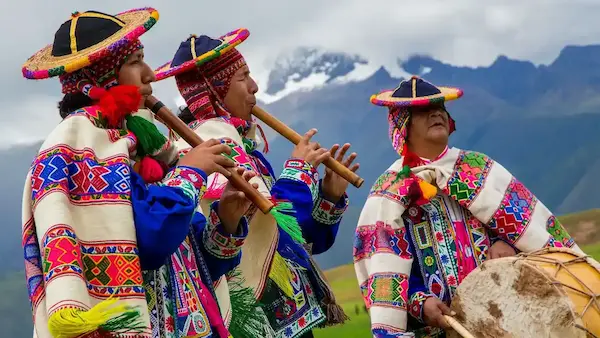
Peru is a country where culture is expressed through every celebration, tradition, and artistic performance. Among its most valuable cultural treasures are the traditional dances, which tell stories of ancient civilizations, religious devotion, agricultural customs, and the blending of Indigenous, Spanish, and African influences. Passed down from one generation to the next, these dances continue to play an essential role in festivals, community gatherings, and national celebrations across the country.
For travelers, discovering the traditional dances of Peru is one of the best ways to understand the country’s rich heritage. Each region has developed its own unique style, featuring distinctive costumes, music, and choreography that reflect local history and identity. Whether performed in the Andes, along the coast, or in the Amazon, these dances offer an unforgettable cultural experience that goes far beyond sightseeing.
Many visitors combine performances of the traditional dances with guided Lima tours to explore museums, historic neighborhoods, and cultural centers where Peruvian traditions come to life. Together, these experiences provide a deeper appreciation of the country’s diversity and long-standing customs.
Why are the traditional dances of Peru so important?
The traditional dances of Peru are much more than artistic performances. They represent centuries of history, preserving customs that have survived through changing civilizations and social transformations. Many dances originated as rituals honoring nature, celebrating successful harvests, or paying tribute to ancient deities. After the arrival of the Spanish, many Indigenous traditions blended with Catholic celebrations, creating unique expressions that are still performed today.
Today, these dances continue to strengthen cultural identity and unite communities across Peru. They are commonly featured during religious festivals, national holidays, patron saint celebrations, local fairs, and cultural events, where performers proudly wear handcrafted costumes and perform to the rhythm of traditional instruments.
Some of the reasons why the traditional dances remain so significant include:
- They preserve centuries of cultural heritage.
- They tell stories about Peru’s history and traditions.
- They celebrate regional identities across the country.
- They keep Indigenous customs alive.
- They bring communities together during important celebrations.
- They allow visitors to experience authentic Peruvian culture.
Learning about these dances offers valuable insight into Peru’s history while providing a deeper understanding of the country’s diverse cultural landscape.
You might also be interested in: Why visit Peru in 2026?: culture, food, nature and adventure
How many traditional dances are there in Peru?
Peru is home to hundreds of folkloric dances, with many experts estimating that more than 1,500 traditional dances exist throughout the country. Each region has developed its own choreography, music, and costumes based on local customs, geography, and historical influences.
Some dances are internationally recognized and performed during major festivals, while others remain unique to specific villages or provinces. Together, they demonstrate the extraordinary cultural diversity that makes Peru one of South America’s richest destinations for traditional arts.
Below are fifteen of the most iconic traditional dances of Peru that every traveler should know.
1. Marinera
The Marinera is widely considered Peru’s national dance and one of the most elegant traditional dances. Known for its graceful movements and romantic symbolism, it represents a courtship between two dancers who communicate through subtle gestures, footwork, and the waving of white handkerchiefs.
Although several regional variations exist, the Marinera Norteña, originating in northern Peru, is the most famous and is performed during festivals and competitions across the country.
What makes the Marinera unique?
Unlike many folkloric dances that involve large groups, the Marinera focuses on the interaction between a single couple. The performance combines elegance, confidence, and playful flirtation, while musicians accompany the dancers with traditional Peruvian melodies.
Key characteristics include:
- Elegant handkerchief choreography.
- Fast and intricate footwork.
- Colorful traditional costumes.
- Romantic storytelling through dance.
- Live guitar and percussion music.
Where can you watch the Marinera?
The city of Trujillo hosts the National Marinera Festival every January, attracting dancers from around the world. However, performances can also be enjoyed during cultural events held in Lima and other major cities throughout the year.
2. Huayno
Few traditional dances are as representative of Andean culture as the Huayno. Originating in the highlands, this energetic dance has been performed for centuries during community celebrations, harvest festivals, weddings, and religious events.
The Huayno reflects everyday life in the Andes, combining joyful movements with music that often tells stories of love, family, migration, and rural traditions.
Why is Huayno so important?
The dance has evolved over time while preserving its Indigenous roots. Today, it remains one of Peru’s most popular folkloric expressions and continues to unite communities across the Andean region.
Typical features include:
- Lively footwork.
- Traditional string and wind instruments.
- Bright regional clothing.
- Songs performed in both Spanish and Quechua.
- Audience participation during celebrations.
Cultural significance
The Huayno is more than entertainment—it serves as a powerful symbol of Andean identity and resilience. Its popularity extends beyond Peru, with communities in neighboring countries also preserving similar musical traditions.
3. Scissors Dance (Danza de las Tijeras)
Among the most spectacular traditional dances is the Scissors Dance, an extraordinary performance recognized by UNESCO as an Intangible Cultural Heritage of Humanity.
Performed primarily in the Andean regions of Ayacucho, Huancavelica, and Apurímac, the dance features highly skilled performers who execute complex acrobatic movements while rhythmically striking two metal blades that resemble scissors.
What makes the Scissors Dance extraordinary?
The dance demands years of physical training, balance, flexibility, and endurance. Performers often compete against one another by completing increasingly difficult sequences without losing rhythm.
Highlights include:
- Acrobatics and jumps.
- Incredible balance and flexibility.
- Live violin and harp accompaniment.
- Traditional ceremonial costumes.
- Rhythmic use of metal scissors.
Historical background
The Scissors Dance originated centuries ago and is closely connected to Indigenous spiritual beliefs. Although its meaning has evolved over time, it remains one of the most respected and visually impressive traditional dances.
4. Diablada
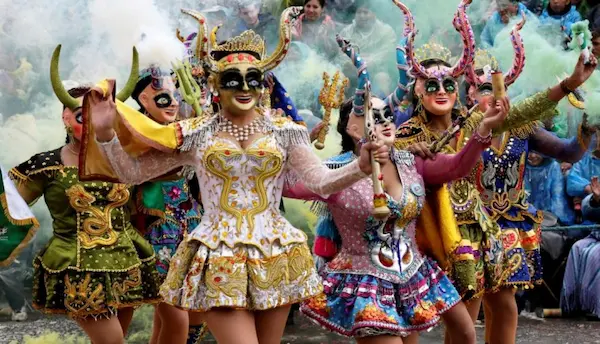
The Diablada is one of the most colorful and dramatic traditional dances of Peru, particularly popular in the southern Andes. It represents the symbolic struggle between good and evil, combining Catholic beliefs with ancient Andean mythology.
The most elaborate performances feature dancers wearing ornate devil masks, embroidered costumes, and elaborate headpieces while moving to the sound of brass bands.
Why is the Diablada so popular?
Its striking visual appearance makes it one of the highlights of many religious festivals.
Visitors are often impressed by:
- Handcrafted devil masks.
- Intricate embroidered costumes.
- Powerful brass band music.
- Large group choreographies.
- Strong religious symbolism.
Where is it performed?
The Diablada is especially associated with the Virgen de la Candelaria celebrations in Puno, although it can also be seen during cultural festivals in other regions of Peru.
You might also be interested in: Machu Picchu Tours: The Perfect Blend of Adventure and Spiritual Discovery
5. Wititi
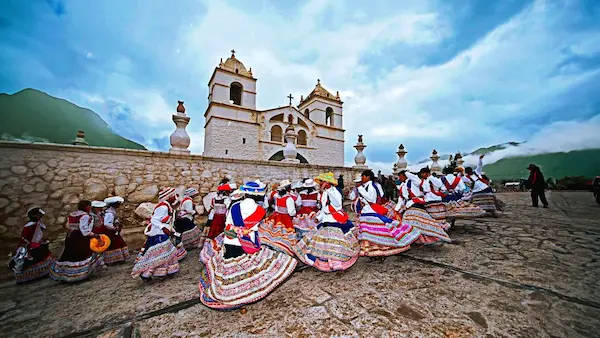
The Wititi is one of the oldest traditional dances, originating in the Colca Valley in the Arequipa region. This elegant dance symbolizes courtship and community traditions while celebrating the agricultural heritage of the Andes.
One of its most distinctive features is the traditional clothing worn by male dancers, who often dress in colorful garments that historically helped them approach women from neighboring communities without attracting attention.
What makes the Wititi unique?
Unlike many folkloric dances, the Wititi combines graceful movements with fascinating historical symbolism.
Its main characteristics include:
- Colorful handwoven clothing.
- Circular group choreography.
- Traditional Andean music.
- Strong agricultural symbolism.
- Recognition by UNESCO as Intangible Cultural Heritage.
Why should travelers experience it?
The Wititi offers visitors an authentic glimpse into life in the Colca Valley, where many communities continue to preserve centuries-old customs. Watching this dance performed during local festivals provides a deeper appreciation of Peru’s cultural diversity and the enduring importance of its traditional dances.
6. Chonguinada
The Chonguinada is one of the most elegant traditional dances of Peru, particularly popular in the central Andes, especially in the Junín region. The dance emerged during the colonial period and is believed to have originated as a satirical interpretation of European ballroom dances introduced by the Spanish nobility.
Over time, local communities transformed the performance into a celebration of their own identity, blending European influences with Indigenous music, colorful costumes, and traditional choreography.
What makes the Chonguinada unique?
The dance is known for its graceful movements and richly decorated attire, making it one of the most visually striking traditional dances.
Its most recognizable elements include:
- Embroidered jackets and dresses.
- Decorative hats adorned with feathers and ribbons.
- Slow, synchronized choreography.
- Traditional Andean orchestras.
- Festive community participation.
Today, the Chonguinada is commonly performed during patron saint festivals and important regional celebrations, where entire communities gather to preserve this centuries-old tradition.
7. Carnaval de Pujllay
The Carnaval de Pujllay is a joyful celebration that honors agricultural abundance and community life in the Andean highlands. While the festival itself has deep historical roots, the accompanying dance has become one of the most representative traditional dances of Peru in several southern regions.
Performers wear colorful costumes decorated with ribbons, mirrors, feathers, and handcrafted ornaments that symbolize prosperity and gratitude for successful harvests.
Why is the Pujllay dance important?
Beyond its vibrant appearance, the dance reflects the close relationship between Andean communities and nature. Music and choreography celebrate fertility, cooperation, and the agricultural calendar that continues to shape rural life.
Visitors attending the festival can enjoy:
- Traditional Andean music.
- Large group performances.
- Handmade costumes with symbolic details.
- Community celebrations.
- Local gastronomy and artisan markets.
The festive atmosphere makes the Carnaval de Pujllay one of the most enjoyable traditional dances to experience firsthand.
8. Tondero
Originating on Peru’s northern coast, the Tondero is another iconic example of the traditional dances. Although it shares certain similarities with the Marinera, the Tondero has developed its own unique rhythm, choreography, and musical style.
The dance reflects the cultural blending of Spanish, Indigenous, and African influences that shaped Peru’s coastal regions over several centuries.
Characteristics of the Tondero
The performance tells a playful story of courtship through expressive movements, lively footwork, and elegant interaction between partners.
Some of its defining features include:
- Fast-paced guitar music.
- Rhythmic hand clapping.
- Romantic storytelling.
- Barefoot or light-footed dancing.
- Traditional white handkerchiefs.
The music accompanying the Tondero is equally important, often featuring guitars, percussion instruments, and heartfelt vocals that celebrate life on Peru’s northern coast.
Where can visitors see the Tondero?
The dance is especially popular in Piura and Lambayeque, although cultural festivals throughout Peru frequently include Tondero performances as part of their folkloric programs.
9. Qhapaq Qolla
The Qhapaq Qolla is one of the most symbolic traditional dances of Peru, representing the ancient traders who traveled across the Andes transporting goods between different regions.
Today, the dance is closely associated with the famous pilgrimage to the Sanctuary of the Lord of Qoyllur Rit’i near Cusco, where thousands of pilgrims gather every year.
Symbolism behind the dance
Each movement reflects the strength, endurance, and resilience required by merchants who crossed the challenging mountain landscapes centuries ago.
The performance typically includes:
- Woolen masks.
- Traditional woven garments.
- Decorative hats.
- Wooden staffs.
- Music performed with flutes and drums.
The dance beautifully illustrates the importance of trade and cooperation in Andean civilization while preserving traditions that continue to inspire new generations.
Cultural significance
Many historians consider the Qhapaq Qolla one of the finest examples of living Andean heritage because it connects modern communities with customs dating back to the Inca Empire.
You might also be interested in: Travel photography in Peru: 15 best places for photographic tourism
10. Shipibo-Konibo ceremonial dances
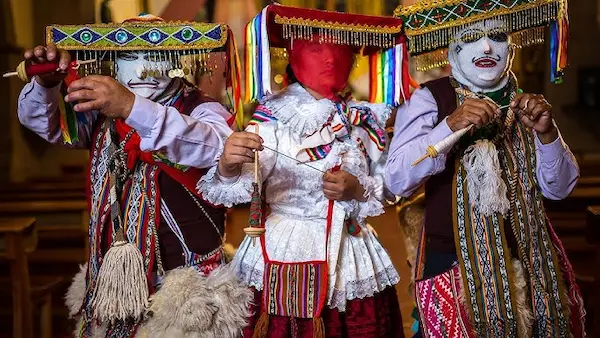
The Amazon rainforest also contributes significantly to the traditional dances of Peru, and the ceremonial dances of the Shipibo-Konibo people offer a fascinating glimpse into Indigenous Amazonian culture.
Unlike many coastal and Andean dances, these performances emphasize spirituality, harmony with nature, and ancestral wisdom rather than elaborate choreography.
What makes these dances different?
Music, chanting, and movement are deeply connected to the natural world and often accompany important community ceremonies.
Common characteristics include:
- Traditional songs performed in Indigenous languages.
- Handcrafted clothing decorated with geometric patterns.
- Rhythmic body movements.
- Ceremonial face painting.
- Spiritual symbolism rooted in Amazonian traditions.
These performances provide visitors with a greater appreciation for the remarkable cultural diversity represented by the traditional dances of Peru.
11. Huaconada
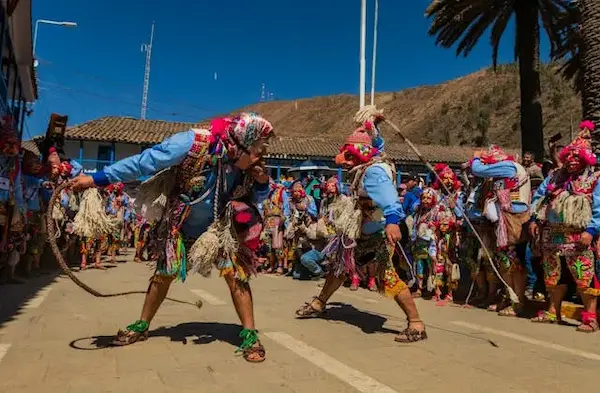
The Huaconada is one of the oldest and most symbolic traditional dances of Peru, originating in the town of Mito, in the Junín region. This ceremonial dance has been recognized by UNESCO as an Intangible Cultural Heritage of Humanity due to its historical and cultural importance.
During the first days of every year, performers known as huacones wear impressive carved wooden masks and carry whips as symbols of authority. Their role is to represent community leaders who maintain order and remind people of the importance of justice, respect, and responsibility.
What makes the Huaconada special?
Unlike many folkloric performances that focus purely on entertainment, the Huaconada carries a strong social message.
Its most distinctive features include:
- Handcrafted wooden masks.
- Traditional ceremonial costumes.
- Slow and symbolic movements.
- Representation of ancestral authority.
- Deep connection with local traditions.
The Huaconada demonstrates how the traditional dances of Peru continue to preserve values that have shaped communities for centuries.
12. Negritos de Huánuco
The Negritos de Huánuco is one of the most joyful traditional dances, celebrated primarily during Christmas and Epiphany festivities. Its origins date back to the colonial period and honor the contributions of Afro-Peruvian communities while blending Spanish and Indigenous influences.
Today, the dance is performed with lively music, colorful costumes, and energetic choreography that fills the streets with celebration.
Highlights of the dance
Visitors are often captivated by:
- Bright embroidered costumes.
- Decorative masks and hats.
- Traditional brass bands.
- Festive group performances.
- Religious and cultural symbolism.
The Negritos de Huánuco is a perfect example of Peru’s multicultural heritage and the way different traditions have come together to create unique artistic expressions.
13. Sara Kutipay
The Sara Kutipay is one of the traditional dances of Peru that reflects the country’s strong agricultural roots. Its name comes from the Quechua language and refers to the cultivation and harvesting of corn, one of the most important crops in Andean communities.
Rather than telling a romantic or religious story, this dance celebrates teamwork, gratitude, and the relationship between people and the land.
What does the Sara Kutipay represent?
The choreography recreates different stages of agricultural work performed by local farmers throughout the growing season.
Key elements include:
- Symbolic farming movements.
- Traditional agricultural tools.
- Community participation.
- Music performed with Andean instruments.
- Colorful regional clothing.
Watching the Sara Kutipay offers valuable insight into the daily life and traditions that have sustained Andean communities for generations.
14. Llamerada
Inspired by the ancient llama caravans that once transported goods across the Andes, the Llamerada is another fascinating example of the traditional dances of Peru.
Historically, llamas played a vital role in trade between mountain communities, carrying food, textiles, and other valuable products through difficult terrain long before modern transportation existed.
Characteristics of the Llamerada
The dance honors both the animals and the people who depended on them for survival.
Visitors will notice:
- Decorative costumes featuring Andean motifs.
- Choreography inspired by llama caravans.
- Traditional panpipe and drum music.
- Group formations representing travel across the mountains.
- Strong ties to Andean history.
The Llamerada is especially popular during religious festivals in southern Peru, where it continues to be performed with great pride.
15. Pandilla Amazónica
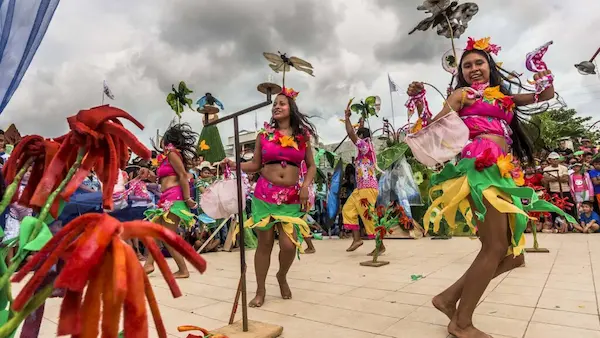
The Pandilla Amazónica represents the cultural richness of Peru’s Amazon region and is among the most cheerful traditional dances of Peru. It is commonly performed during local festivals and celebrations that bring communities together through music, dance, and traditional customs.
Unlike many Andean dances, the Pandilla Amazónica features lively rhythms, relaxed choreography, and an atmosphere that encourages audience participation.
Why is the Pandilla Amazónica so popular?
Its joyful nature makes it one of the easiest dances for visitors to appreciate.
Highlights include:
- Energetic group dancing.
- Traditional Amazonian music.
- Colorful regional attire.
- Community celebrations.
- Festive atmosphere suitable for all ages.
The dance reflects the warmth, hospitality, and cultural diversity that characterize Peru’s rainforest communities.
Where can you experience traditional dances of Peru?
One of the best ways to enjoy the traditional dances of Peru is by attending local festivals, cultural performances, and regional celebrations. While some dances are closely associated with specific areas of the country, many can also be seen during cultural events in major cities, making them accessible even if you have limited time to travel.
Throughout the year, numerous festivals in Lima, Peru feature folkloric performances that bring together dancers from different regions, offering visitors an excellent introduction to Peru’s diverse traditions in a single destination.
Why travelers should experience traditional dances of Peru
Watching the traditional dances of Peru allows visitors to understand the country’s history in a way that museums alone cannot provide. Every performance tells a story about local communities, their beliefs, and the traditions that continue to shape Peruvian culture today.
Many performances are accompanied by traditional food, artisan markets, and cultural exhibitions, creating an immersive experience that appeals to travelers of all ages.
If you’re planning to explore the Andes, including Cusco tours in your itinerary is an excellent way to witness several of these dances during local festivals and religious celebrations, particularly in communities where these traditions remain an important part of everyday life.
Tips for experiencing traditional dances of Peru
Whether you’re attending a major festival or a small community celebration, a little preparation will help you enjoy these cultural performances even more.
Research festival dates
Many traditional dances are performed during specific religious or regional celebrations, so checking event calendars before your trip can help you plan your itinerary.
Arrive early
Popular performances often attract large crowds. Getting there ahead of time allows you to find a good viewing spot and explore nearby cultural activities.
Respect local customs
Many dances have spiritual or religious significance. Watching respectfully, avoiding interruptions, and following local guidelines will enhance your experience while honoring community traditions.
Support local artisans
Many festivals feature markets where visitors can purchase handmade textiles, musical instruments, artwork, and traditional crafts. Buying directly from local artisans helps preserve these cultural traditions.
Take time to learn the stories behind each dance
Understanding the history and symbolism of the traditional dances of Peru makes every performance more meaningful and provides a deeper appreciation of the country’s cultural heritage.
Conclusion
The traditional dances of Peru are much more than colorful performances—they are living expressions of the country’s history, identity, and cultural diversity. Each dance tells a different story, whether it celebrates a successful harvest, honors religious traditions, represents everyday life in the Andes, or preserves customs that have been passed down for centuries. Together, they create a remarkable cultural legacy that continues to unite communities across the country.
For travelers, experiencing the traditional dances of Peru offers a deeper connection to the places they visit. Watching these performances allows you to appreciate the craftsmanship behind the costumes, the rhythm of traditional music, and the meaning behind every movement. It’s an opportunity to understand Peru beyond its famous landmarks and discover the traditions that remain at the heart of local life.
Whether you’re exploring the coast, the Andes, or the Amazon, including cultural performances in your itinerary will make your journey even more memorable. From internationally recognized dances such as the Marinera and the Scissors Dance to lesser-known regional traditions, the traditional dances of Peru showcase the extraordinary richness of a country where history, art, and community continue to move in perfect harmony.
