

Imagine experiencing the breathtaking mountain landscape while on one of the amazing trips in the Peruvian highlands. For this reason, we would like to discuss the mita system with you today. What is this? You might inquire. Once, under the terraced hillsides and cobblestone roads, it uprooted a whole civilization. It was vital to the people’s survival and a spiritual duty that went beyond work in constructing the enormous Inca empire. Nevertheless, one of the most horrible effects of colonialism would eventually result from the corruption of this same system. In this historical journey, we’ll discover how the Incas used the mita system to organize society and why it ultimately came to symbolize exploitation. From the sacred architecture of Cusco to the haunting mines of Potosí, every section of this book reveals a new layer of memory, resistance, and power.
What was the Mita system?
The Mita system was a rotational labor tax implemented by the Inca Empire. Rather than paying tribute in gold or food, each household contributed labor to state projects. It wasn’t a job it was a sacred duty.
Able-bodied men, usually between 15 and 50 years old, were assigned to work for a few months each year. They built roads, farmed imperial lands, raised llamas, constructed temples, and even defended the empire. This labor wasn’t random it was carefully planned, respectful of agricultural cycles, and deeply embedded in the Andean worldview.
📌 Key difference from slavery: Mita was not forced servitude. It was based on reciprocity—the idea that citizens gave to the state, and the state took care of its people in return.
You might be interested: 21 Facts about inca culture

A system born from Andean values: Ayni and Minka
The Mita system wasn’t born in the palace of Cusco it was an evolution of ayni and minka, ancestral practices of shared labor. In ayni, you help your neighbor today, and tomorrow they help you. In minka, the community works together for a common goal, like harvesting crops or fixing a roof.
The Inca state took these local customs and scaled them across an empire. Thanks to meticulous planning, each region fulfilled its labor obligations without jeopardizing its own survival. Population records were kept using quipus, and work rotations were organized to avoid community burnout.
Implementation during the Inca Empire
The implementation of the Mita system was masterfully efficient. Local curacas (chiefs) organized labor quotas, while state officials ensured fairness. Workers were rotated to maintain productivity in their home villages, and they were often compensated with food, coca leaves, chicha (corn beer), and clothing during service.
Main types of Mita labor
The Mita wasn’t a single job it was an entire ecosystem of labor, tailored to the needs of an empire that stretched across jungles, deserts, valleys, and snowcapped peaks. Each task wasn’t just “work” it was a contribution to the survival and glory of the Inca civilization.
Let’s explore the four fundamental pillars of Mita labor, where each mitayo played a role that shaped history.
Agriculture
The mitayos who worked in agriculture were responsible for cultivating state-owned lands that sustained not only the royal family and priesthood, but also armies and vulnerable populations during hard times. They farmed a rich variety of crops like maize, potatoes, quinoa and coca on terraced mountainsides—masterpieces of Inca engineering that you can still walk through today. These workers weren’t planting just for survival—they were feeding a civilization, storing produce in qullqas (granaries) across the Andes to withstand droughts, wars, and long winters.
Infrastructure
Inca infrastructure projects were nothing short of epic, and mitayos were the builders behind them. These workers constructed the famed Qhapaq Ñan (royal road system), rope bridges over wild rivers, ceremonial temples like the Coricancha, and precision-fitted stone walls that still stand without mortar. Each structure they built wasn’t just functional it was a symbol of imperial order and cosmic alignment. Today, hikers and history buffs still marvel at these achievements, many of which were laid stone by stone under the Mita system.
Military Service
Military service under the Mita wasn’t simply about going to battle—it was about protecting the unity and borders of the empire. Young mitayos were trained, organized and deployed to remote outposts, expansion campaigns, and highland garrisons, especially in newly conquered regions. Their role was both strategic and symbolic: to show presence, keep order, and defend the will of the Sapa Inca. Their strength ensured that the empire remained connected from Ecuador to Chile, and many of the roads you walk today were first marched by these soldier-citizens.
Artisan Work
Not all mitayos labored with picks and shovels some served with looms, chisels, and fire. Skilled artisans contributed to the empire by weaving elaborate textiles, crafting pottery, forging tools, and producing ceremonial items for temples and nobles. These artists created tunics finer than gold, decorated with intricate patterns that told stories of identity and rank. Even today, Andean weaving traditions carry the legacy of these Mita artisans, and visitors to communities like Chinchero can witness techniques passed down over five centuries.
You can also read: Altitude sickness in Cusco: 8 essential steps to avoid it

How the Mita was organized
The Mita system was powered by four key types of labor. In agriculture, mitayos farmed state lands to feed armies, priests, and entire communities, shaping the terraced fields that still contour the Andes. In infrastructure, they built roads, rope bridges, temples, and irrigation canals many of which travelers still walk on today. As soldiers, mitayos defended borders and expanded the empire, leaving their mark along highland trails. And as artisans, they wove intricate textiles, forged tools, and created sacred objects crafts that continue to live on in Andean villages.
The Mita rotation:
- Who worked? Primarily men between 15 and 50 years old.
- How long? Typically 2 to 4 months per year.
- What about their farms? Neighbors helped maintain each other’s crops in their absence, reinforcing community bonds.
Mita under Spanish rule: From reciprocity to exploitation
After the Spanish conquest, the Mita system was co-opted and twisted into a tool of colonial oppression. Viceroy Francisco de Toledo institutionalized the colonial Mita, forcing indigenous men to work in brutal conditions, especially in silver mines like Potosí.
This new form of Mita was no longer reciprocal. It was extractive, violent, and dehumanizing. Thousands died from overwork, exposure, and mistreatment. The system that once symbolized unity and balance became a symbol of suffering.
Lasting impact on Andean societies
Although the colonial period distorted the original meaning of the Mita, its essence—communal labor and reciprocity—is still very much alive in Andean culture. In many towns, neighbors continue to organize faenas, where they voluntarily clean irrigation canals, repair footpaths, or build shared infrastructure. There’s no money exchanged; only time, effort, and solidarity. These traditions reflect a deep-rooted worldview where collective wellbeing outweighs individual gain. For those who want to witness this living legacy firsthand, choosing a local-focused travel agency Peru can open the door to authentic experiences—where history isn’t just told, but lived through the people who still carry it forward.
You might also be interested: The 10 most incredible peruvian waterfalls
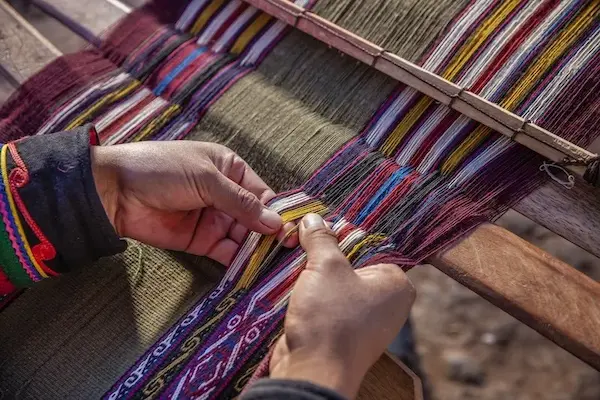
Examples of living legacies
The Mita system may belong to the past, but its spirit is still woven into the daily life of many Andean communities. From ancient trails still in use to rituals and crafts that have survived for centuries, the legacy of collective labor remains alive quietly connecting modern Peruvians to their Inca ancestors. Here are a few ways you can still witness the Mita’s enduring influence today.
Textile production
In Andean villages, traditional weaving techniques are still alive today. The patterns, colors, and methods used by Inca artisans continue to be passed down through generations, preserving both cultural identity and ancestral knowledge. These textiles aren’t just souvenirs; they’re history woven into fabric.
Andean road use
Parts of the ancient Inca road system, built by mitayos, are still actively used by locals. Farmers, herders, and villagers rely on these paths to move through rugged terrain, just as their ancestors did. In some remote areas, the original stones still support daily life and travel.
Community rituals
Many rural festivals, planting ceremonies, and communal projects reflect the same spirit of reciprocity and collective effort that once defined the Mita. These traditions keep the Andean sense of unity and shared responsibility alive, centuries after the fall of the empire.
Social and economic contributions of the Mita
The Mita allowed the Incas to achieve incredible feats without a currency or market economy. Through sheer organization and shared responsibility, they built:
- Over 24,000 miles of roads (Qhapaq Ñan)
- Dozens of fortresses and temples
- A system of state granaries that prevented famine
- A unified empire, from Ecuador to northern Chile
This system turned isolated communities into parts of a larger whole. It was a model of sustainable governance, grounded in balance, not domination.
You can also read: 8 Festivals in Peru: A Vibrant tradition and Joy!

Where you can see the mita legacy today
If you’re exploring Peru, you’re walking through the footsteps of mitayos ordinary men whose collective labor shaped an extraordinary civilization. The remnants of their work aren’t hidden in museums; they’re out in the open, still in use, still alive. These are just a few of the places where the spirit of the Mita endures:
The Inca Trail
Every stone on the Inca Trail was placed with intention, precision, and effort each one a testament to the mitayos who connected the heart of the empire with its sacred sanctuary in the clouds. As you hike along this legendary path toward Machu Picchu, you’re not just on a trek you’re following the same route used by messengers, soldiers, and builders centuries ago. The Mita didn’t just build a road; it built a lifeline across the Andes that still guides adventurers today.
Sacsayhuamán
Perched above the city of Cusco, Sacsayhuamán is a masterpiece of Inca architecture and a monumental result of Mita labor. Its enormous zigzagging stone walls, made of blocks weighing up to 120 tons, were carved, transported, and fitted together by mitayos without mortar, using techniques that continue to baffle engineers. Visiting this site through one of the many cusco tours available today gives travelers a direct view into the ambition and precision of Inca civilization, and the immense human force that brought it to life.
Moray and Tipón
Tucked into the Sacred Valley and the southern outskirts of Cusco, these two sites show the Inca’s agricultural genius in full bloom. Moray’s concentric terraces served as a high-altitude farming laboratory, while Tipón’s gravity-defying canals irrigated entire hillsides—both engineered and maintained through the rotational labor of mitayos. Standing here, you’re witnessing ancient innovation that’s still studied by modern agronomists and admired by every traveler with a sense of wonder.
Why travelers should care about the Mita System
If you’re exploring Peru, you’re not just seeing ruins you’re experiencing the legacy of a society built on shared effort and social harmony.
- That perfectly paved trail? Mita.
- That irrigation canal still in use today? Mita.
- That community celebration where everyone brings a dish? The spirit of Mita.
Understanding this system adds a profound layer of meaning to your journey. You’re not just a tourist you’re a time traveler, tracing the paths of thousands who worked for a future they’d never see, but you now walk through.
You can also read: The best time to hike in Cusco: 5 essential trekking tips

Frequently asked questions about the Inca Mita system
The Mita system can seem complex at first glance but it was a brilliant and highly organized way to keep an empire running across mountains, valleys, and coasts. To help you better understand how this ancient labor structure worked (and how it shaped the very trails you may walk today), here are some of the most common questions travelers and history lovers ask.
Was the Mita mandatory?
Yes, the Mita was obligatory for all able-bodied men within the empire, but it wasn’t seen as a punishment or burden. Instead, it was considered an honorable way to contribute to the well-being of the empire. Each community organized its participation with pride, knowing that their labor helped build roads, temples, farmlands, and other essential structures that held the empire together.
Did women participate?
They did, though not in the same roles as men. Women supported the Mita through activities rooted in tradition and skill, such as weaving fine textiles for the state, preparing ceremonial foods, and assisting during large religious festivals. These contributions, though often less visible in stone, were fundamental to sustaining both the economic and spiritual life of the Inca civilization.
How long did service last?
Mita service usually lasted between two and four months per year, depending on the needs of the state and the region. The system was rotational, allowing workers to return to their communities in time for planting or harvest seasons. This balance ensured that while the empire advanced its projects, local economies and family life were not neglected.
What changed during colonial times?
After the Spanish conquest, the Mita system was transformed into something far more exploitative. Colonial authorities used it to extract labor for silver mining, especially in Potosí, often under inhumane conditions. Unlike the Inca version, which included reciprocal benefits like food, protection, and land access, the colonial Mita offered no such support. It became a system of forced labor that led to immense suffering and depopulation in many Andean regions.
Walking the roads of the ancients
We hope that this blog has been extremely beneficial to you and that you now have a better understanding of the Mita system, which serves as a reminder of how a system that was so effectively employed and created for the Inca population’s common good was turned into an oppressive system during Spanish rule. We can better comprehend history and pay tribute to all of our Peruvian ancestors today by knowing about this. Therefore, discussing this also creates an opportunity to learn from the past and avoid making the same mistakes again.
As tourists, we have the opportunity to learn a lot more about the past and understand the significance of the places we could visit and explore today, appreciating the beauty in every story. It is also possible for us as tourists to respect and preserve the natural and cultural heritage of the places we visit.
